Why Your Crypto Bot Is Losing Money in Regime Transitions
Bitcoin's drop to $61,034 and $1.5B in liquidations expose a structural flaw in most automated strategies. Here's why static bots bleed during regime transitions.
Analysis, research, and regime intelligence for Bitcoin and crypto traders.
Bitcoin's drop to $61,034 and $1.5B in liquidations expose a structural flaw in most automated strategies. Here's why static bots bleed during regime transitions.
On-chain data is powerful but slow. Derivatives markets detect regime shifts hours before blockchain data confirms them — and at a fraction of the cost.
US-China tariff escalation has driven Bitcoin from $90K+ to sub-$73K in 2026. Here's how tariff announcements are triggering regime shifts — and what resolution could mean.
Aggregate backtests hide regime-specific blow-ups. Here's how to build a regime-filtered backtest that reveals where your strategy's edge actually comes from.
SOL has a mature derivatives market — but reading it requires a different framework than BTC. Here's how funding rates and OI reveal the SOL regime.
Stablecoin flows reveal where capital is positioned before price moves. Learn how USDT flows and stablecoin supply regime map to crypto market regime transitions.
A technical guide to building a crypto trading bot architecture that gates strategy execution by regime state. Covers API patterns, webhooks vs polling, and strategy routing.
CryptoHopper's Algorithm Intelligence rotates strategies by regime. But how does it compare to dedicated regime tools? Here's when to use each.
BTC trades at $76,767 amid macro-driven selling and fear sentiment. Here's how the bitcoin regime may 2026 is classified — and what would trigger a shift.
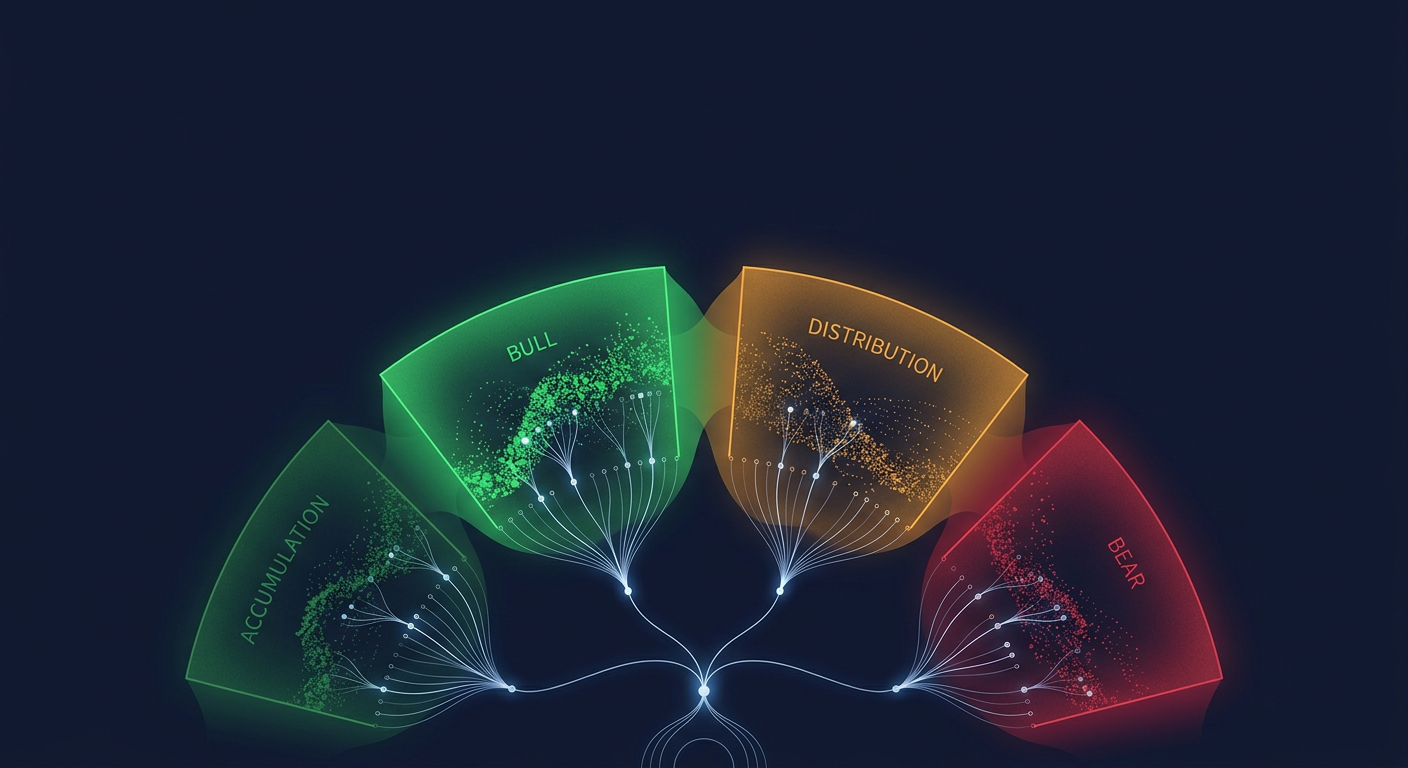
Scale Bitcoin exposure dynamically using a five-regime framework: full size in bull trends, stepping down to zero in bear markets. Concrete formulas included.
ETH doesn't just follow Bitcoin. Learn how ethereum regime analysis differs from BTC, what the ETH/BTC ratio reveals, and which signals matter most for ETH regime detection.
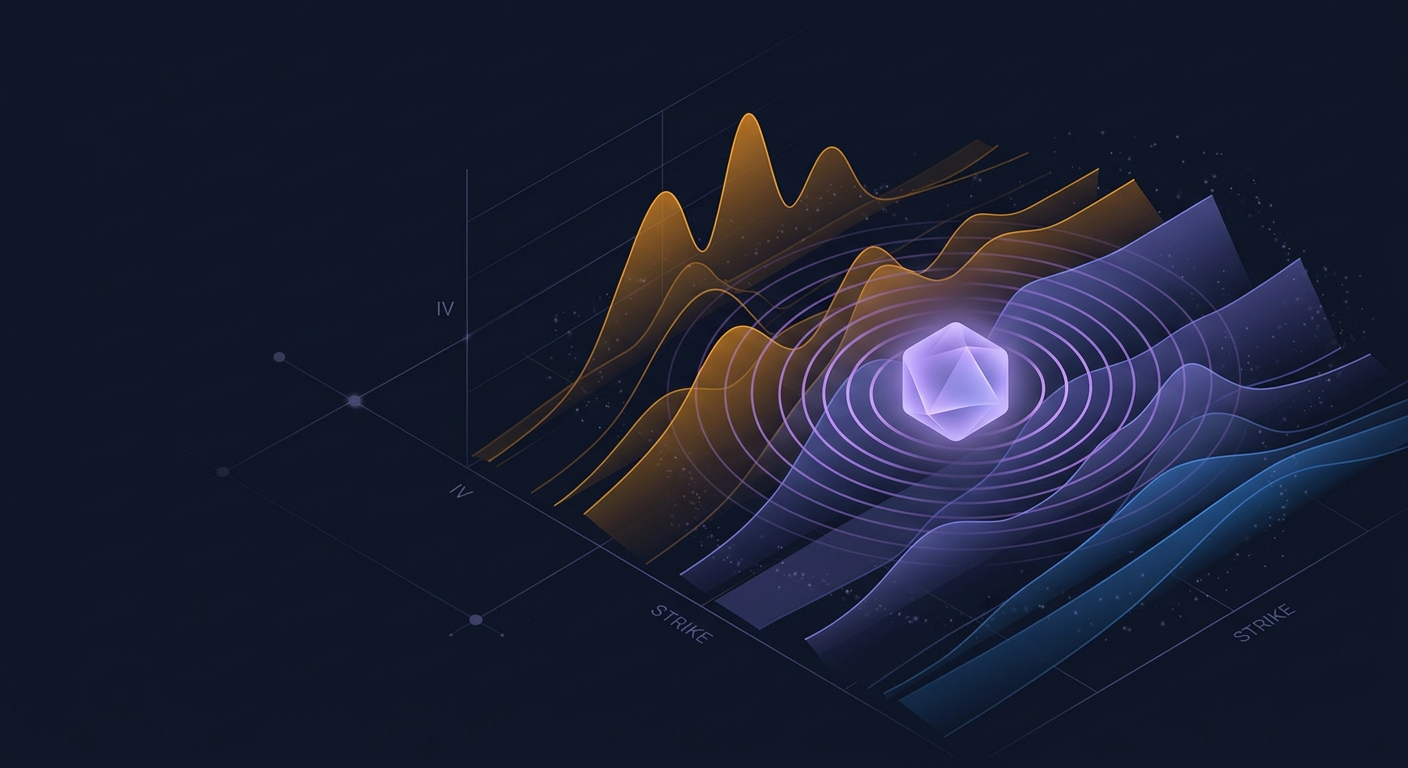
Bitcoin options skew and DVOL are among the most powerful — and most overlooked — regime signals in crypto. Here's how to read them.
AI trading agents now use regime detection as a core decision layer — gating strategies, sizing positions, and managing risk based on market state. Here's how they work in 2026.
GetRegime uses 6 signals and 3 regime states. RegimeRisk uses 200+ ML features and 5 states. Here's what that difference means in practice.
A market regime transition begins in derivatives and correlation data long before price confirms it. Here's how to detect one early using a multi-signal framework.
Bitcoin stalled at $81,200 ahead of a key inflation print. Here's how macro events trigger regime transitions — and why derivatives see them first.
On-chain vs derivatives analysis: two frameworks, two time horizons. Learn which signals move first and how to combine them for sharper Bitcoin trading decisions.
A quant-focused survey of GARCH, HAR-RV, implied vol, and ML approaches to bitcoin volatility forecasting — and how vol forecasts feed regime classification.
When BTC futures trade above spot, the market is in contango. When they trade below, backwardation. Here's what that gap reveals about institutional positioning.
Bitcoin just reclaimed $80K on a $300M short squeeze. But violent squeezes can happen inside distribution ranges. Here's how derivatives data reveals what price hides.
Volatility regimes matter more than price direction. Learn how to identify bitcoin volatility compression and expansion cycles — and what the current $80k reclaim signals.
BTC is down ~40% from its $126k ATH, range-bound at $67k–$76k with 46+ days of negative funding. A regime analysis of what recovery actually looks like.
The Fear and Greed Index is easy to read — but it ignores derivatives, lags regime shifts, and can't tell you what type of market you're in. Here's what to use instead.
Raw price data fails at regime boundaries. A breakdown of the feature categories — derivatives, on-chain, macro, microstructure — that actually drive crypto regime classification.